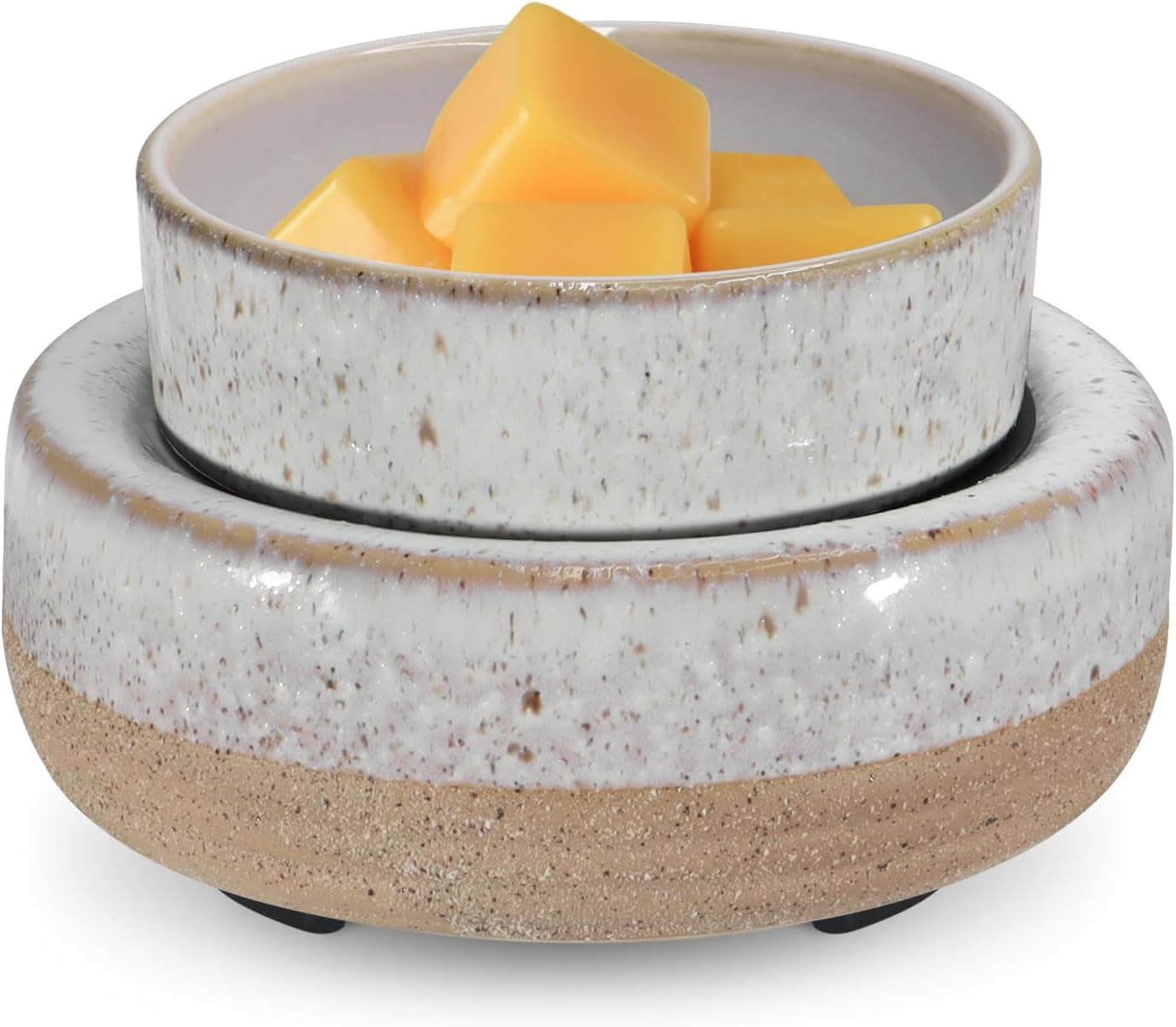
Ceramic Wax Warmer
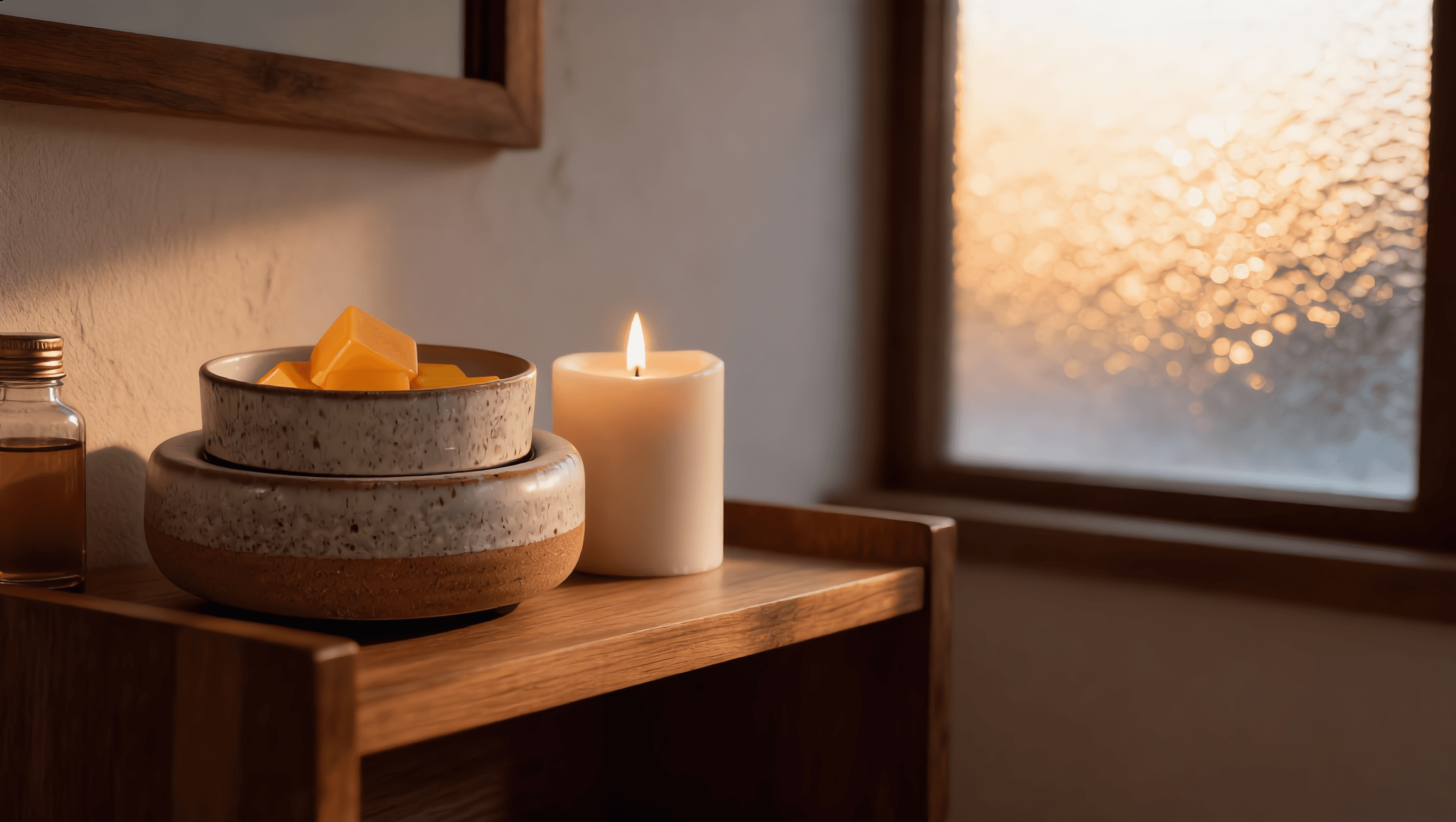
Speckled stoneware that plugs in and warms wax. No flame, no soot, nothing to blow out at bedtime.
Shop on Amazon →- speckled stoneware
- electric plate element — no bulb
- no flame
The details
- Material: speckled stoneware
- Size: 5" x 5" x 3.1" (1.3 lb)
- Heat: electric plate element — no bulb, no flame, no tealight
- Controls: timer and adjustable temperature
- Works with: wax melts, jar candles, essential oils
- Notes: produces no smoke or soot, and nothing needs extinguishing
Why we picked it
Three different things get sold under almost the same name, and the difference decides whether you end up with the thing you meant to buy.
A wax warmer — a wax melt warmer, in longer form — is what this is. A dish holds scented wax and brings it up to a low, steady heat. Nothing burns. The wax pools, throws scent for hours, and sets hard again when you switch it off, ready to melt again tomorrow.
A candle warmer is usually a lamp pointed down at a jar candle you already own, melting the top layer without lighting the wick. Different job, different object — and it is where the bulb comes in.
A wax burner is the traditional one: a ceramic holder with a tealight underneath. It works, and it puts back the open flame you were trying to get away from.
Searchers use all three names interchangeably, and almost nobody selling them explains which is which.
The real split is not the naming, though. It is how the heat is made. Plenty of warmers use a halogen bulb that doubles as a light, and when it goes you are hunting a replacement for a small appliance. This one has no bulb. It heats from a plate element underneath, so there is nothing to burn out and nothing to source, and it gives off no light at all — which is either the reason to buy it or the reason not to. On a bedroom shelf overnight, a warmer that stays dark is the point.
The rest of the case is the one every warmer shares. A wick burns wax far hotter than it needs to. Melting it gently means the scent comes off slowly and keeps coming, and a jar that would have been gone in a fortnight lasts considerably longer. The timer and the adjustable temperature are what make that practical rather than theoretical.
The speckled glaze is why this one is here rather than one of the hundred others. Most warmers look like what they are — small, white, plastic, with a switch. This reads as a piece of pottery that happens to be plugged in.
Styling notes
Put it where a flame would make you uneasy: a bedroom shelf, a bathroom, a hallway table, anywhere there is a curious cat or a small child or a stack of paper. It wants to be near an outlet and reasonably central, because scent from a warmer drifts rather than rises the way it does off a flame — behind a door or under a shelf, half of it never leaves the corner.
Beyond wax melts, it quietly solves the last inch of every jar candle, where the wick has drowned and no match will reach. Dig the wax out, drop it in the dish, and you get the evenings you already paid for. A few drops of essential oil work too, if you would rather diffuse than melt.
At five inches square it takes about as much shelf as a mug, and it reads as pottery first, so it can stay out between uses instead of living in a cupboard. That is most of the argument for spending anything on the object rather than the wax.
Good to know
- It rescues the last of half-burnt jar candles you can no longer light.
- It gets properly hot. Put it on something that will not mind, and start at the lower temperature rather than the higher one.
- Wipe the dish while the wax is still warm to switch scents. Once set, it lifts out in one piece if you run the warmer for a minute first.
- Wax does not evaporate. It stops smelling long before it looks used up, so change it when the room goes quiet, not when the dish looks empty.
- Use the timer rather than your own memory. That is the difference between a warmer and one more thing to remember on the way out.
Chosen for the same reason