
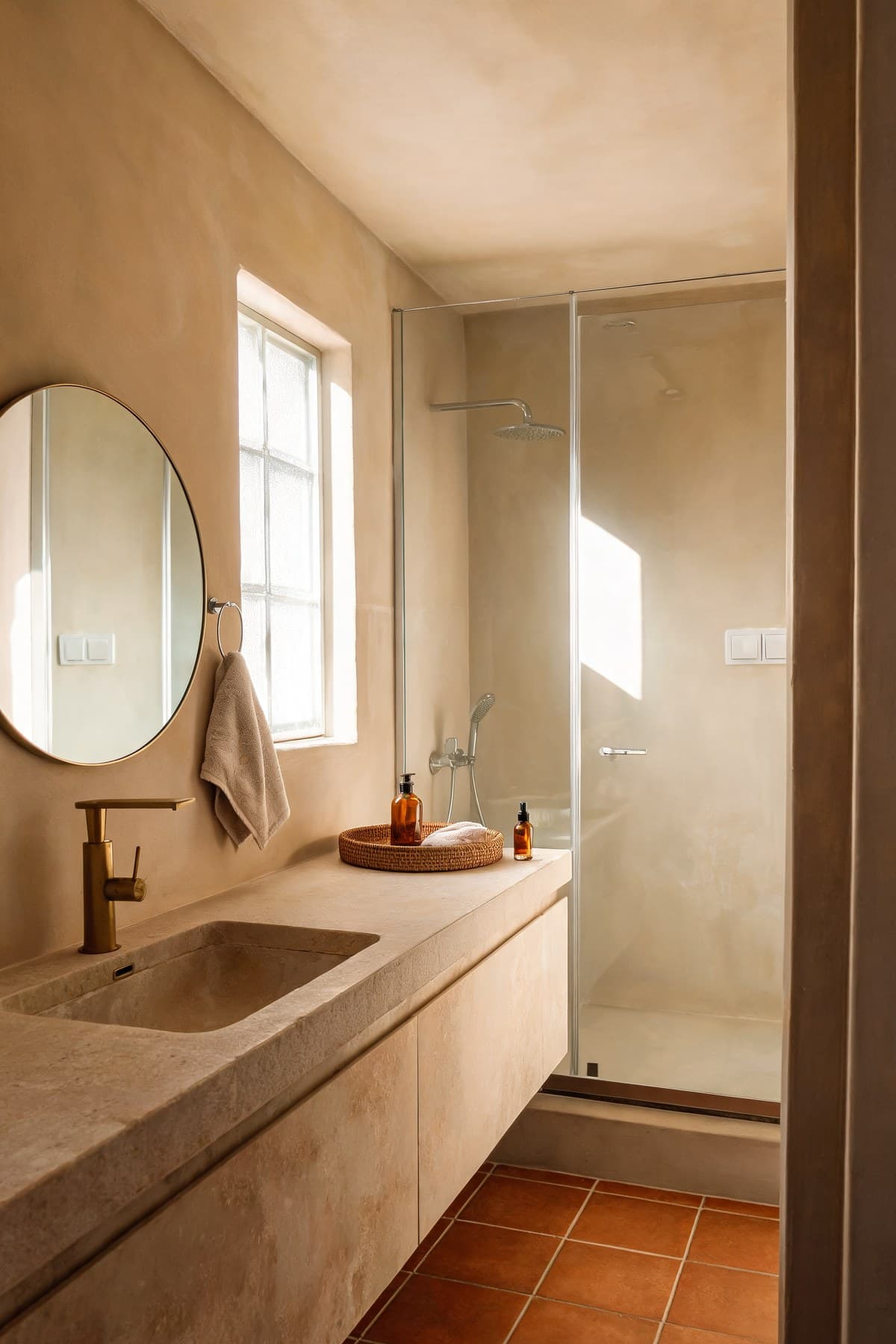
Small Bathroom Ideas
Work with the square footage instead of against it.
Give the Counter an Edge
The same objects, contained, read as half the clutter.
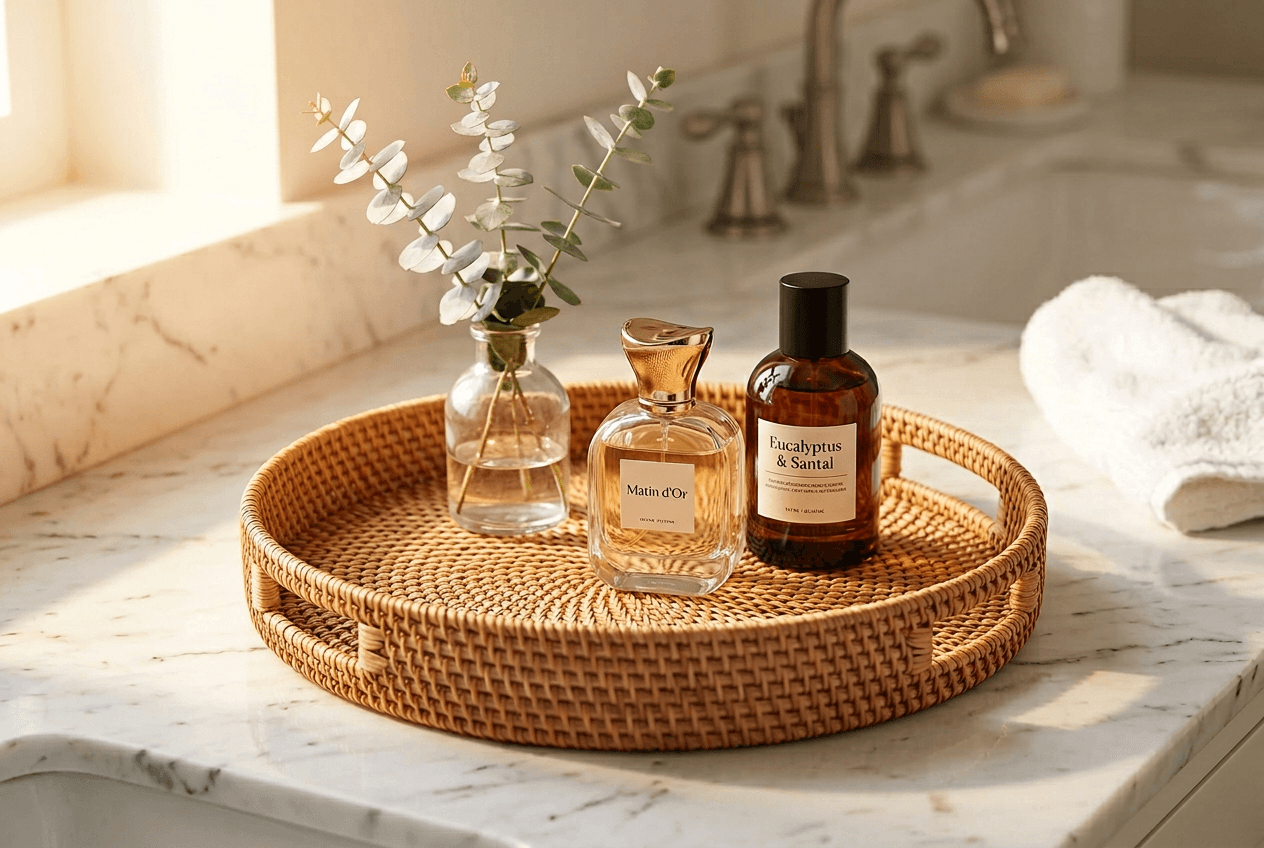
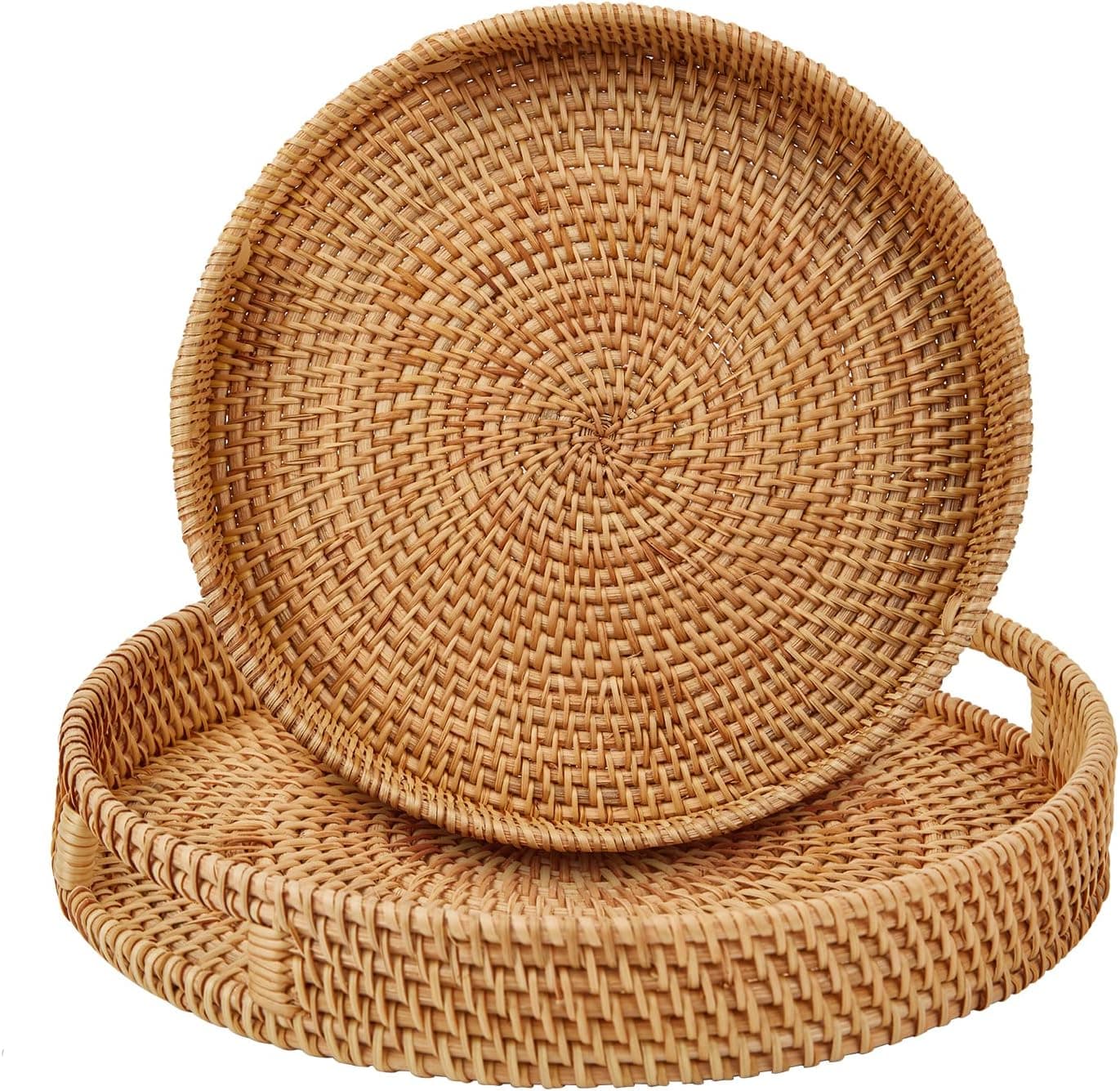
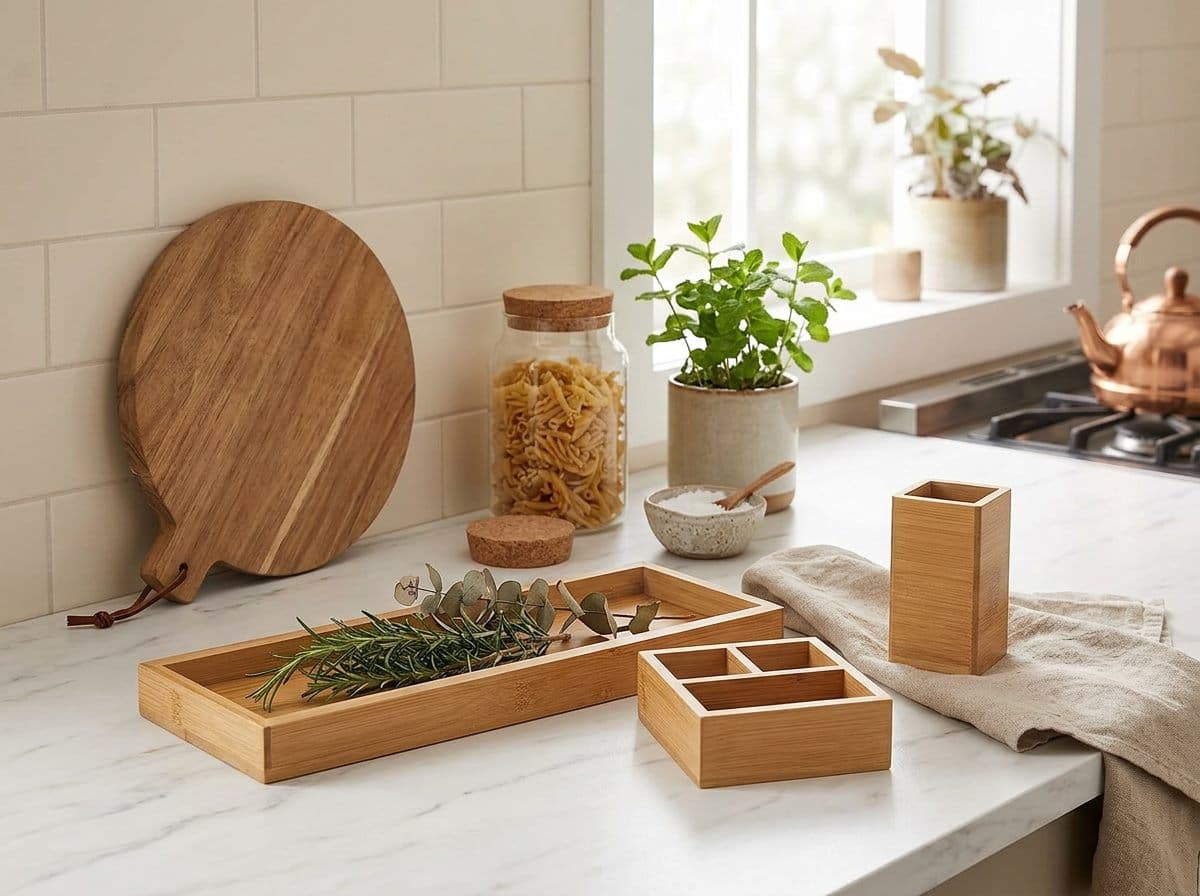
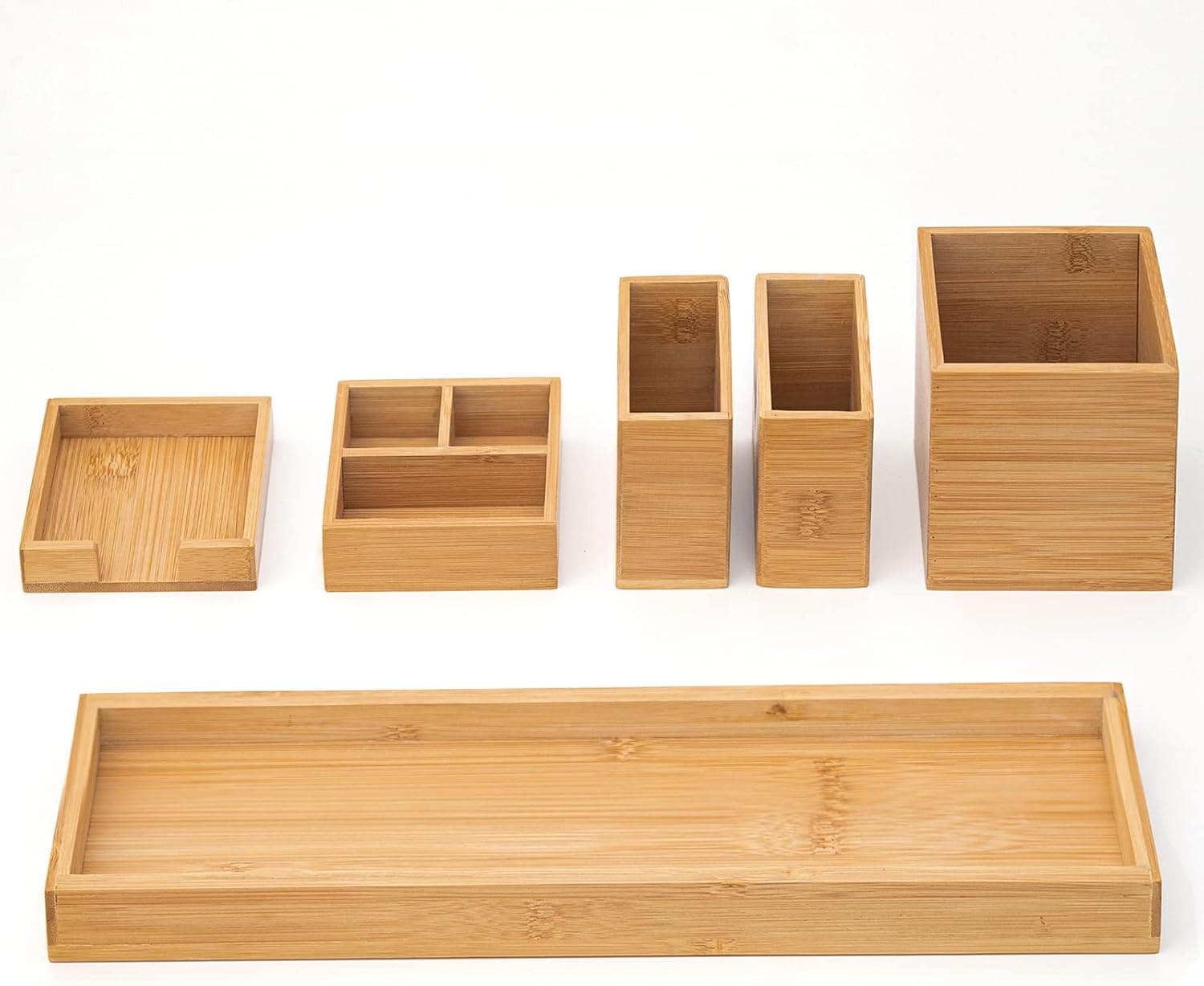
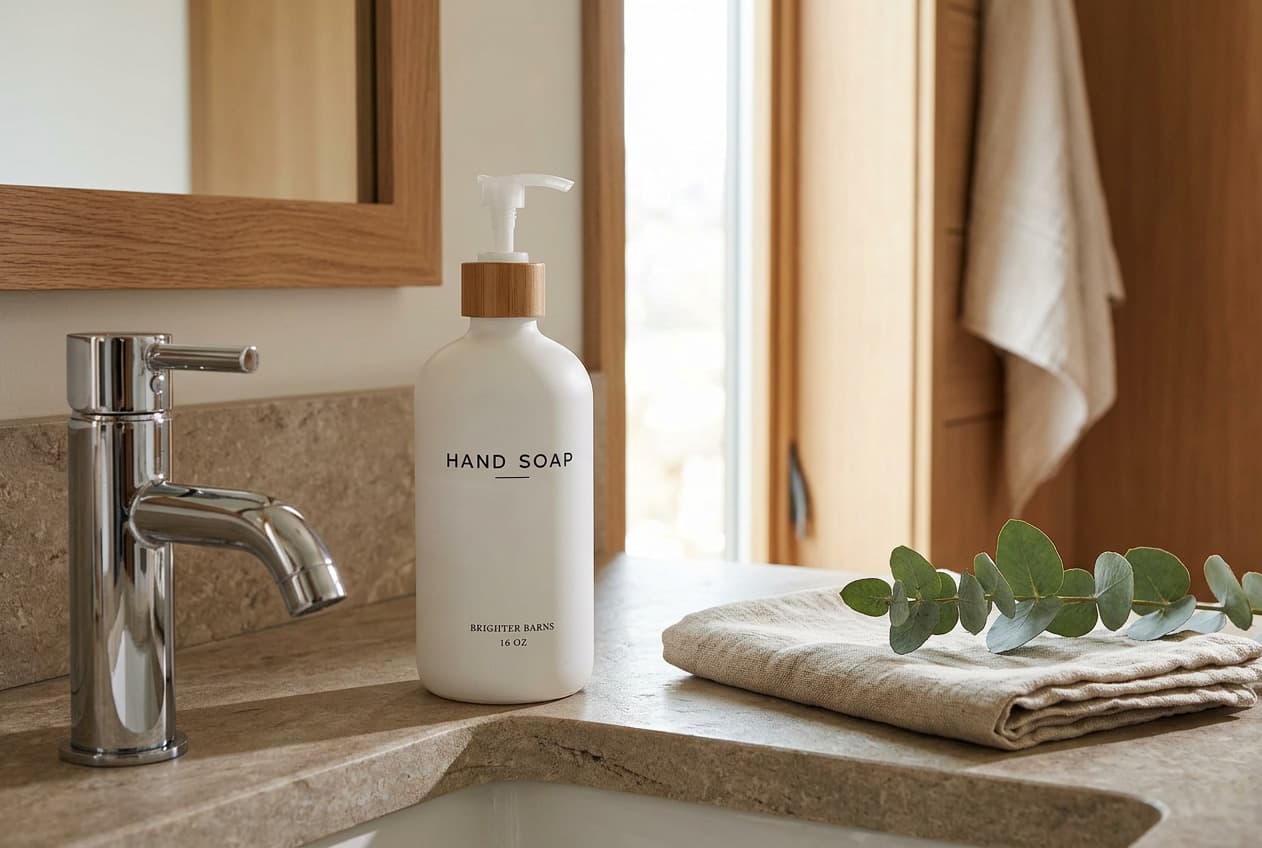
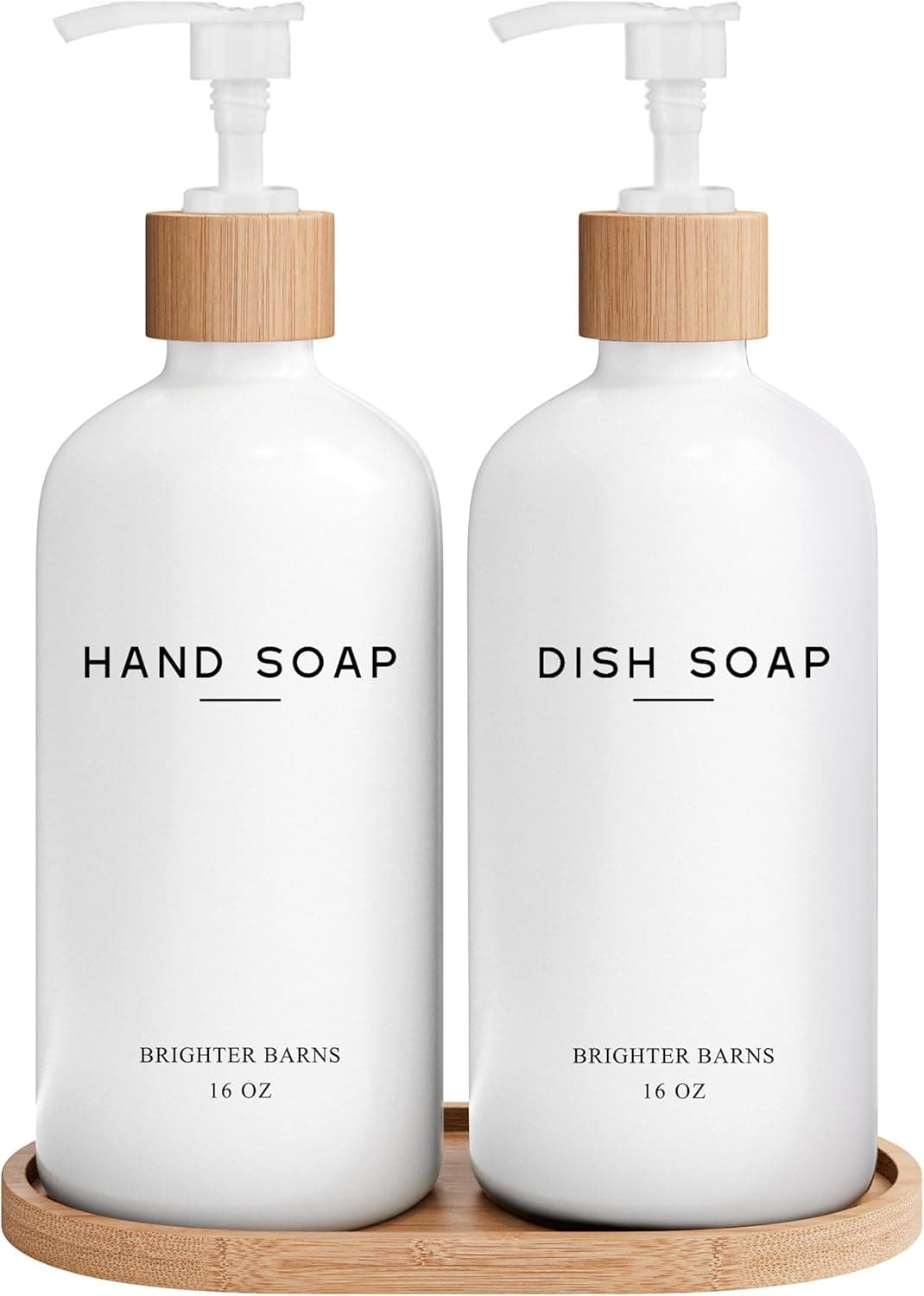
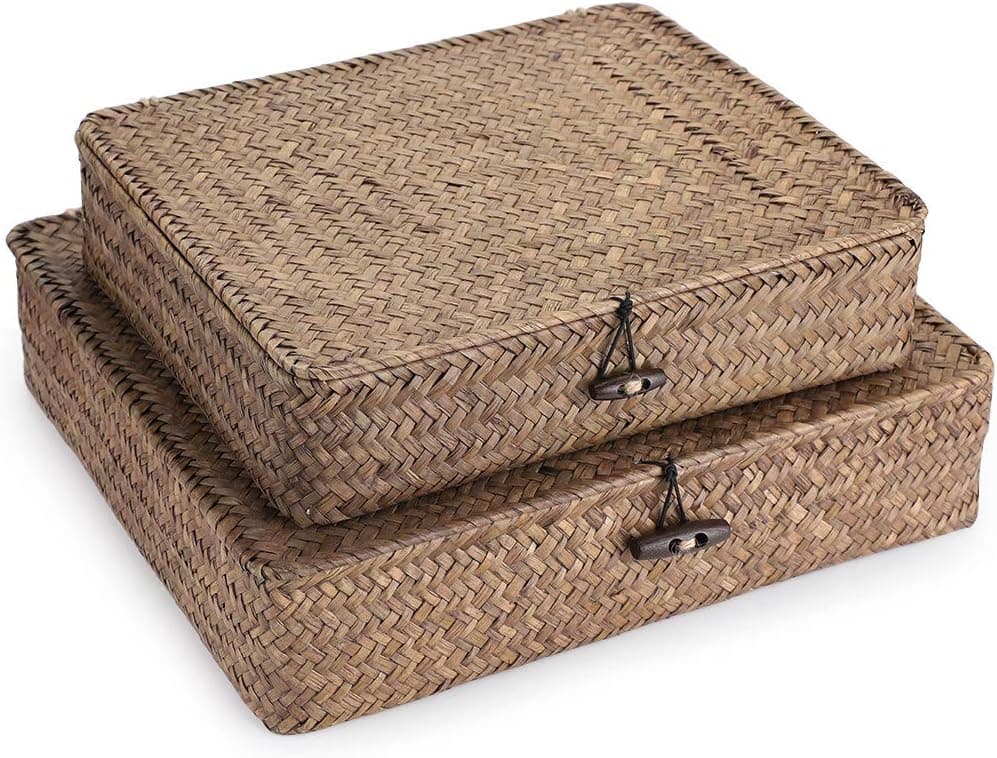
A small bathroom rarely has a clutter problem so much as an outline problem. Six things scattered across a narrow counter look like chaos; the same six things inside a tray look like a set. That's the whole trick, and it costs you nothing in space because the tray sits where the objects already were. Woven rattan in two sizes covers both a tight vanity and a wider one, and they nest when the counter is clear. Matching pump bottles do the same job for soap, replacing the mismatched plastic that manufacturers design to be seen from a shelf rather than lived with. A modular bamboo set breaks the surface into compartments so small things stop migrating.
Go Up, Not Out
The floor is full. The wall above it isn't.
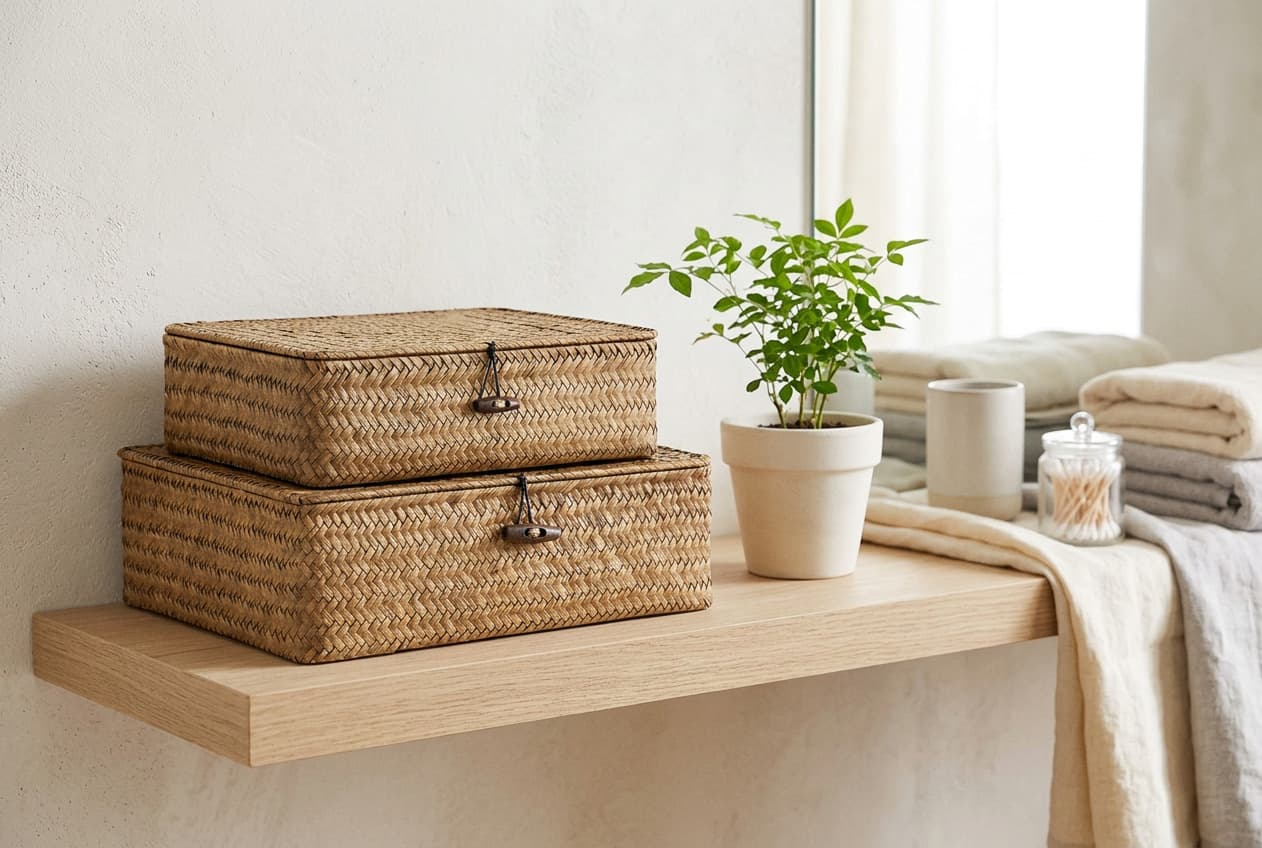
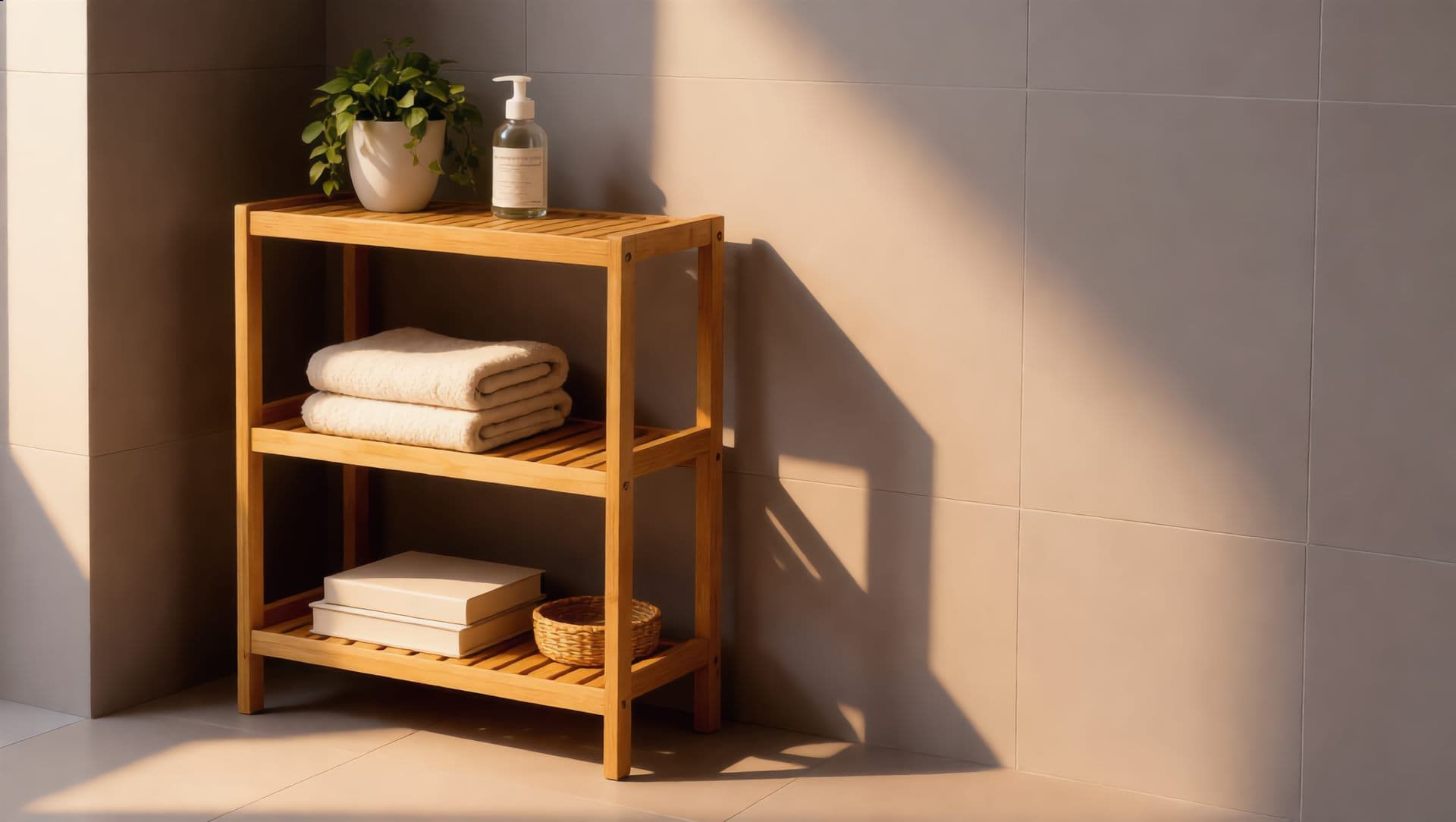
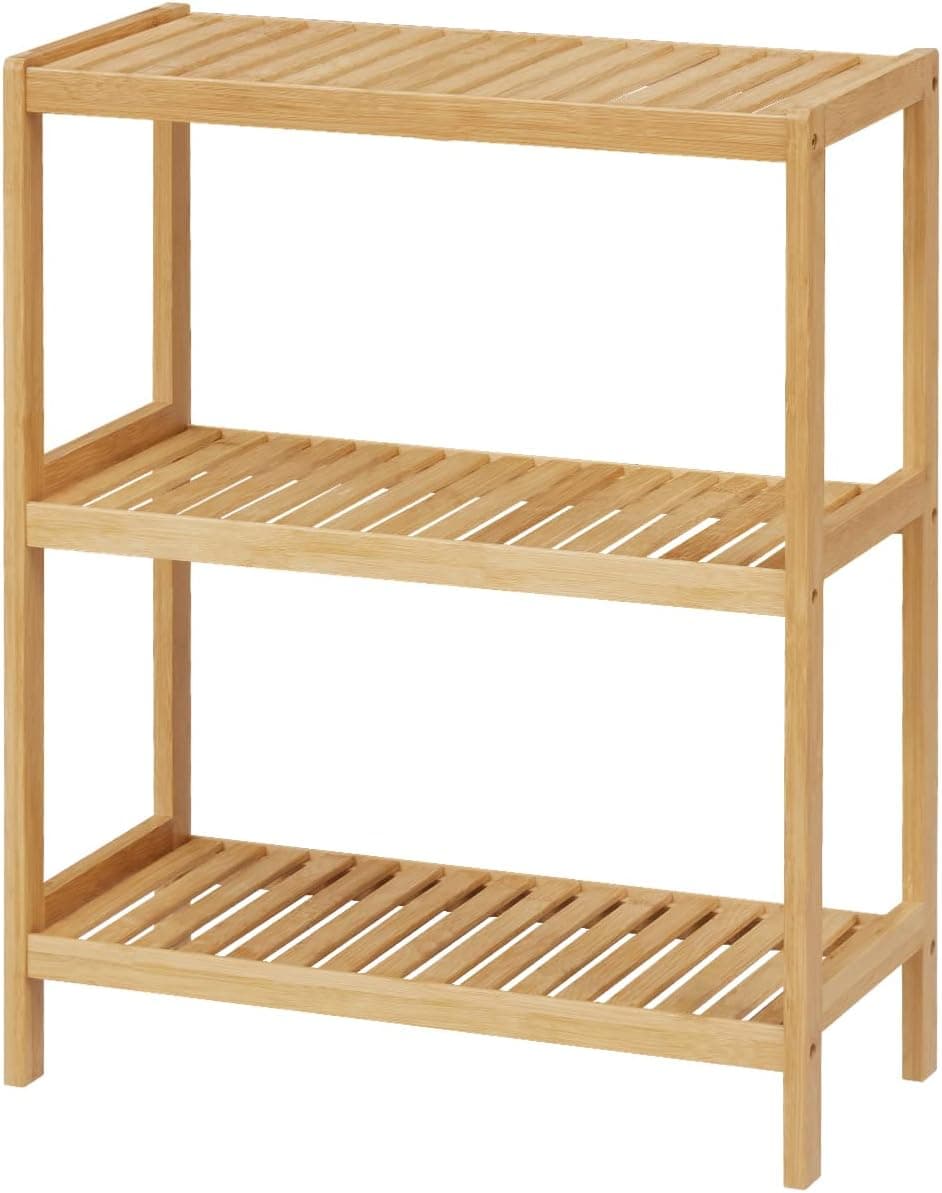
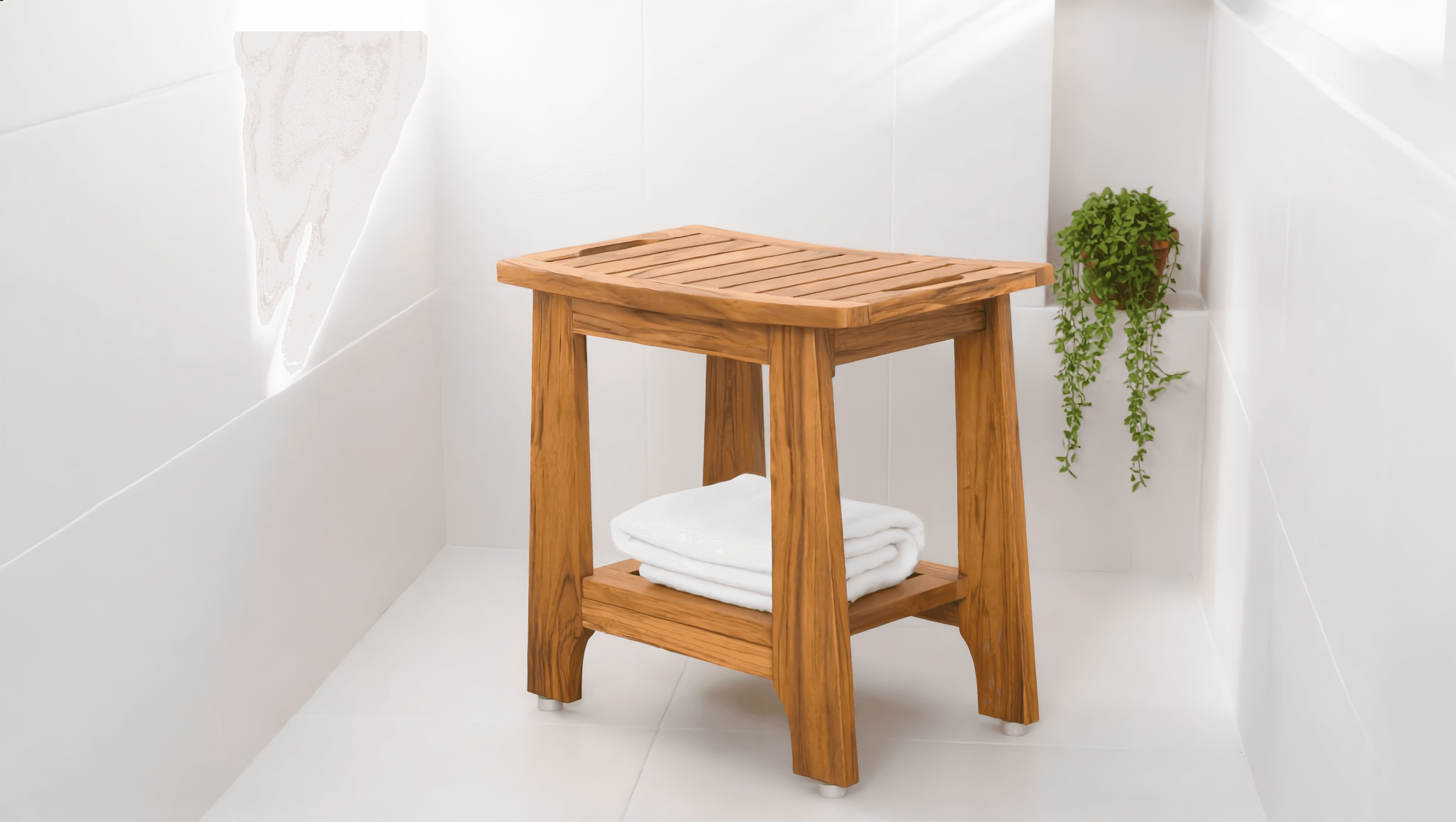
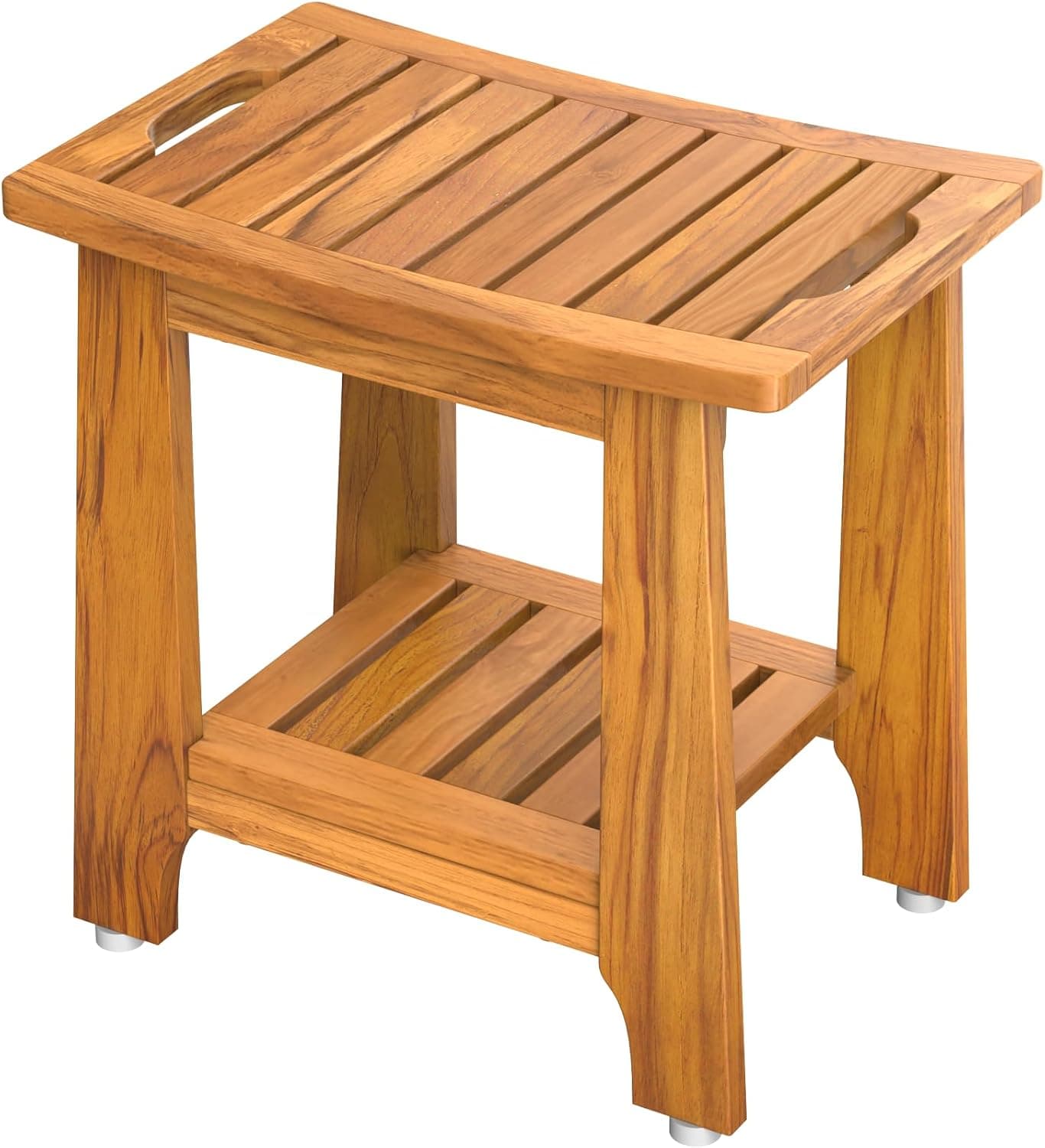
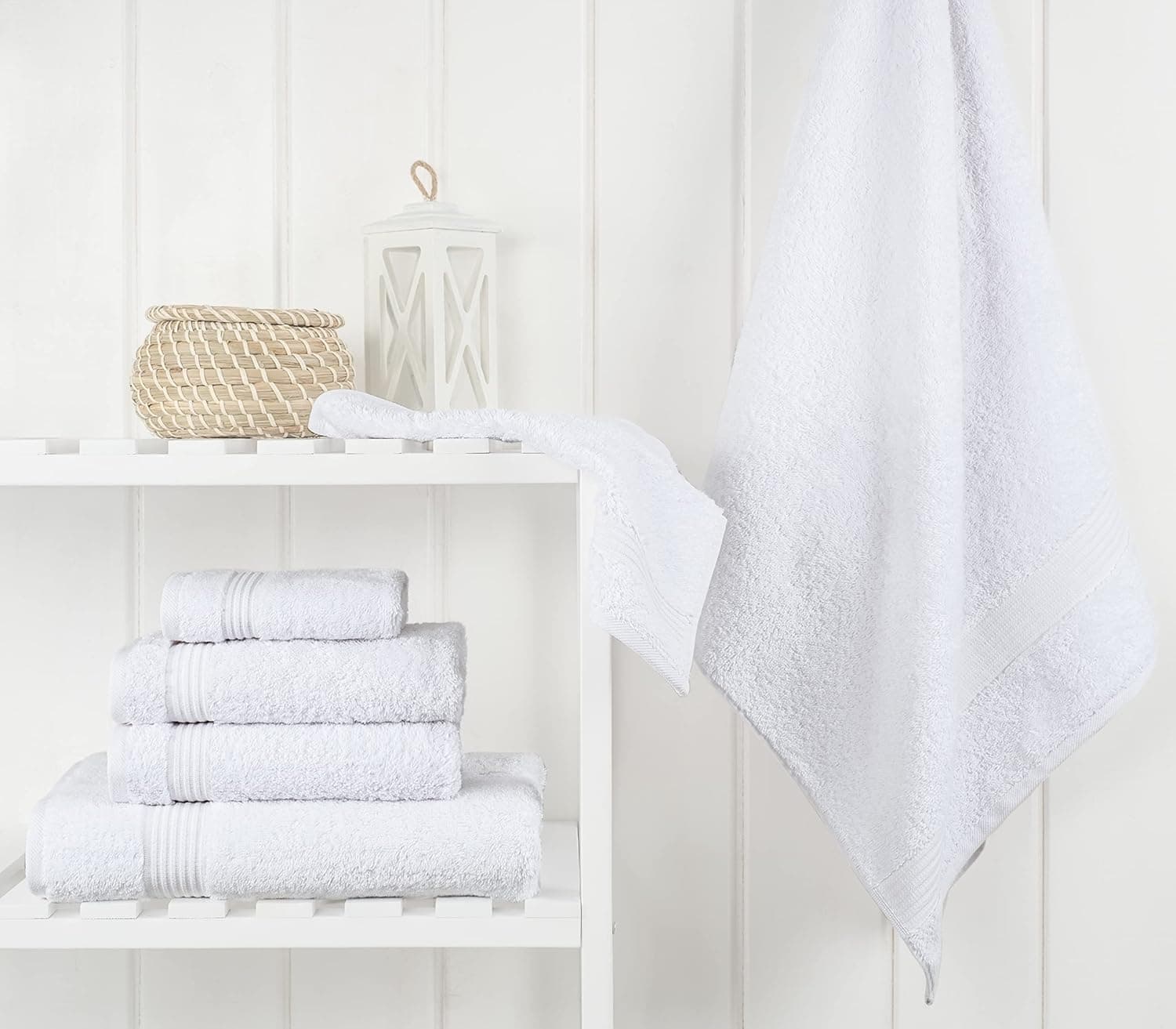
Every small bathroom has unused height and no room to add depth. A slatted three-tier shelf takes a corner and uses it properly, and the gaps between the slats matter more than they sound like they should — light passes through, so the shelf doesn't read as a solid block eating the room. Lidded baskets stack on it, which turns one shelf into two levels of storage while keeping what's inside out of sight. A teak bench works the same angle in a wet room: a seat when you want one, a shelf for towels underneath when you don't, and a footprint smaller than the space it frees up on the floor.
The Damp Problem
Small rooms hold moisture. Choose things that shed it.
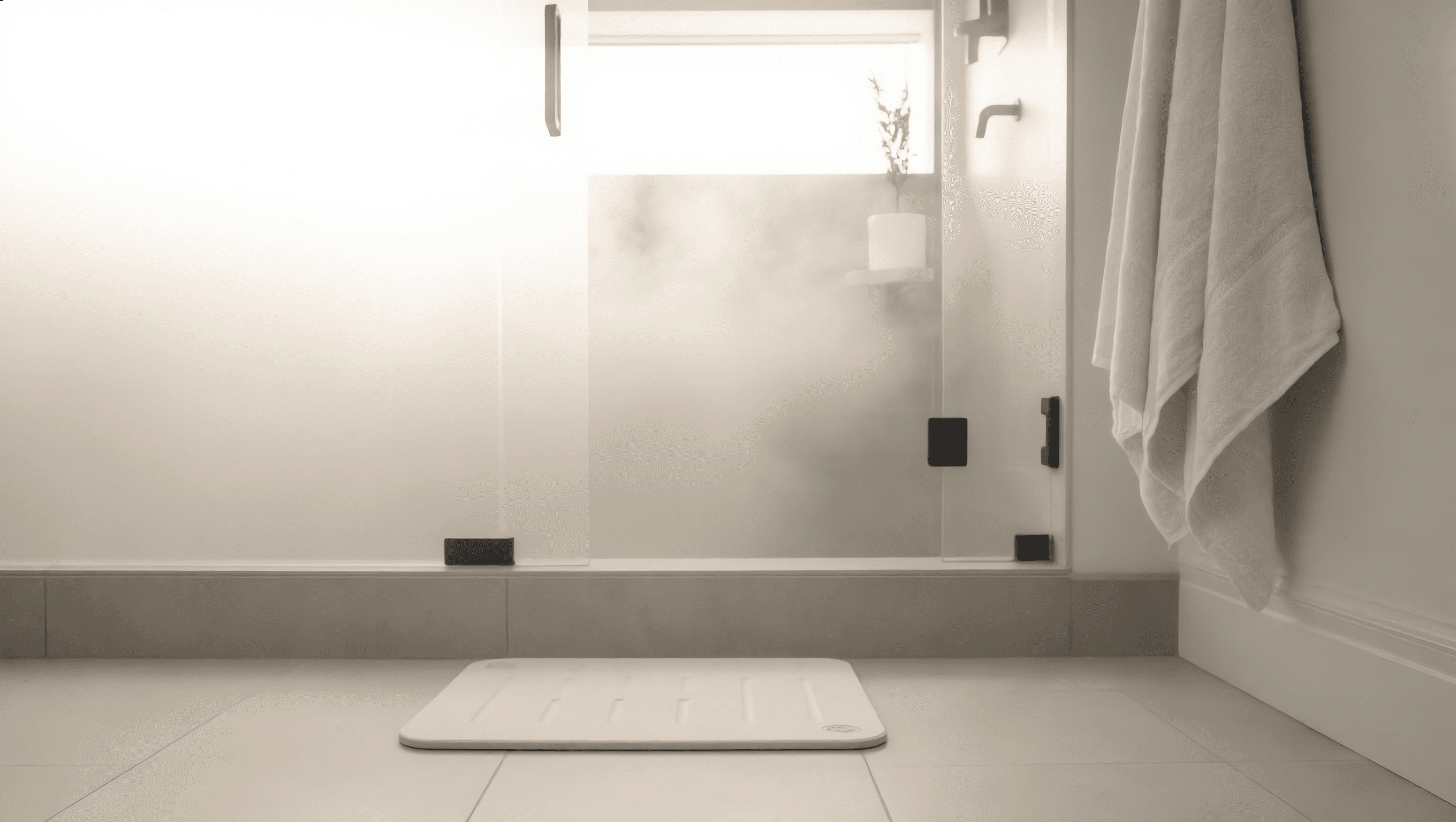
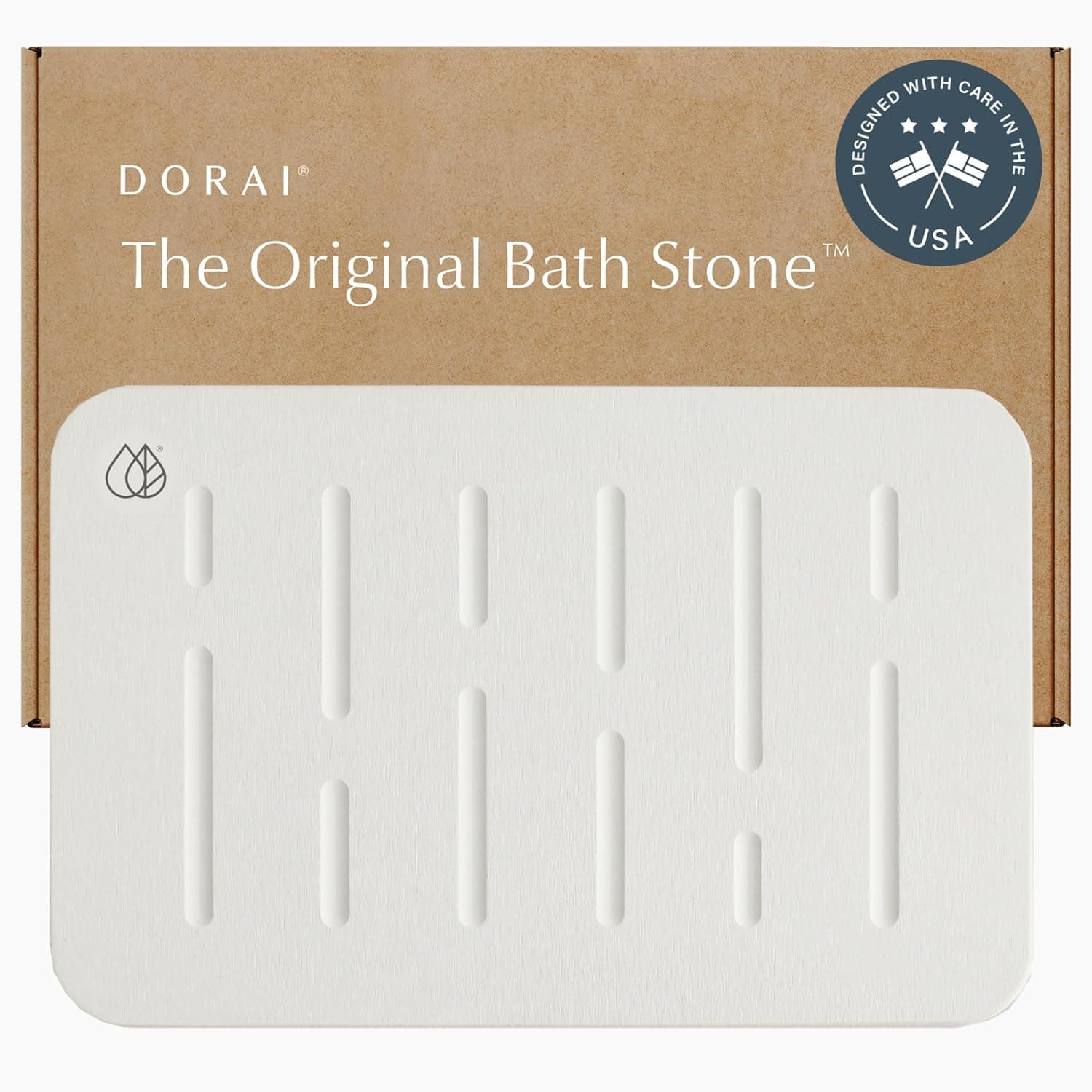
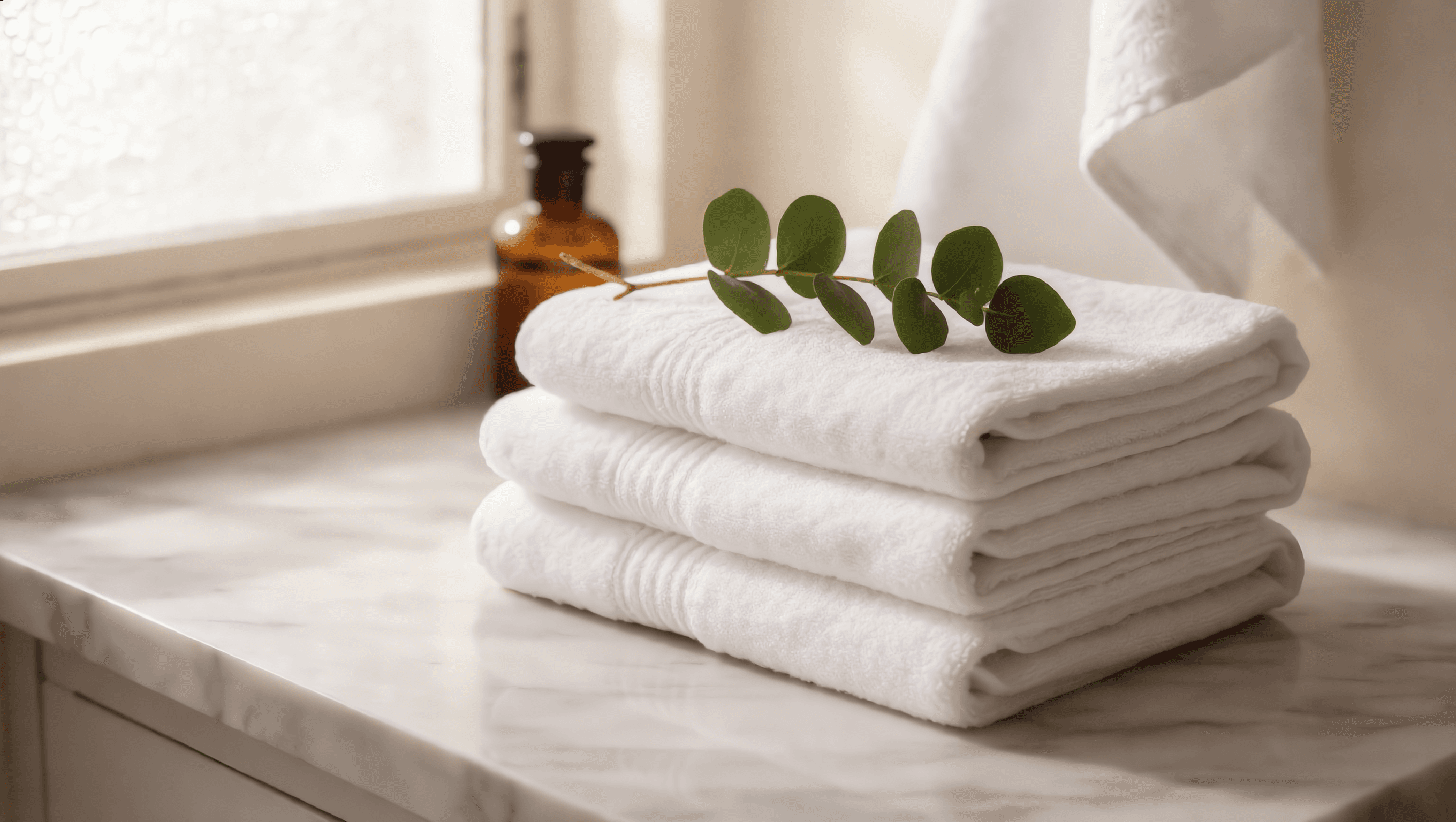
Less air in a room means damp lingers, and in a small bathroom the fabric is what suffers. A stone bath mat is the single biggest change available here: diatomaceous earth pulls the water off your feet and releases it within seconds, so there is no wet mat on the floor, no mildew smell by Thursday, and nothing to put through a wash. Towels are the other half. Turkish cotton is thinner than terry and dries considerably faster, which is what you want when the rail is short and the room never quite airs out. Keeping the whole set to one tone is also the cheapest way to make a small room look bigger than it is.
Most advice about small bathrooms is about making the room look larger — mirrors, pale paint, nothing on the floor. It works up to a point, but it treats the size as a fault to be disguised, and once you've painted everything white you've run out of moves. The more useful framing is that a small bathroom is a room where every object is visible, all the time, from about four feet away. Nothing recedes into the background. That's the actual constraint, and it changes what's worth buying.
What follows from it is that quantity hurts you faster than size does. In a large bathroom, one extra bottle disappears. In a small one it's a third of the counter. So the first job isn't storage, it's outline: give the things that live out in the open a container so they read as one object instead of six. A tray does more for a narrow vanity than a cabinet does, because the cabinet needs wall you don't have and the tray needs none.
The second job is height. Floor space is fixed and mostly spoken for, but the vertical space above head height in a small bathroom is almost always empty. Storage that stands in a corner and goes up beats anything that reaches out into the room, and slatted or open shelving beats a solid unit, because you keep the sightline through it and the room doesn't shrink around the furniture.
The third is damp, which small rooms get worse than large ones simply because there's less air to absorb it. That's where the fabric choices matter more than they would elsewhere: a mat that dries in seconds instead of hours, and towels thin enough to dry properly on a short rail. Get those three right and the square footage stops being the thing you notice first.
Everything here also lives in the bathroom collection, which is worth a look if your room is short on storage rather than short on space — the constraint changes which half of the list matters.